
7-DAYS INTENSIVE SAILING COURSE
SKIPPER TRAINING
A complete program that combines two key skills: 3 days of intensive docking training and maneuvering, 3 days of sailing and navigation + 1 day of condensed theory. This course will prepare you for your first independent cruise.
Duration7 days
AccommodationOn board
ParticipantsMax. 6
Price700-1100 EUR
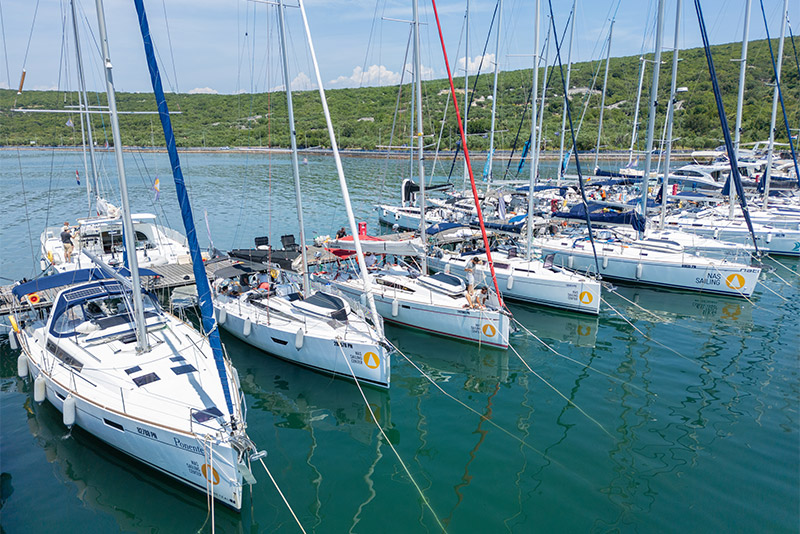
LocationPunat, Krk Island
PrerequisitesNone
Course Format
7 DAYS – 4 DAYS DOCKING AND SHORT THEORY · 3 DAYS NAVIGATION
- Locations: Punat / Kvarner
- Vessel: Salona 45 (2003)
- Group: 4–6 participants
- Schedule: 9–17 (8 h/day)
Course Objectives
DOCKING TRAINING
- Precise stern and alongside docking: approach, centering, timely slowing down and stopping.
- Safe and controlled maneuvering in a marina at low speeds.
- Understanding the influence of wind and lateral drift and the correct selection of angle and approach to the berth.
- Well-coordinated communication and distribution of crew roles (lifting and securing mooring lines, stern mooring lines, fenders).
- Correct use of springs and leverage and rotation around fenders for controlled departure.
- Fast and orderly handling of lines: preparation before approach, tying, releasing and safe departure from the berth.
BASICS OF SAILING
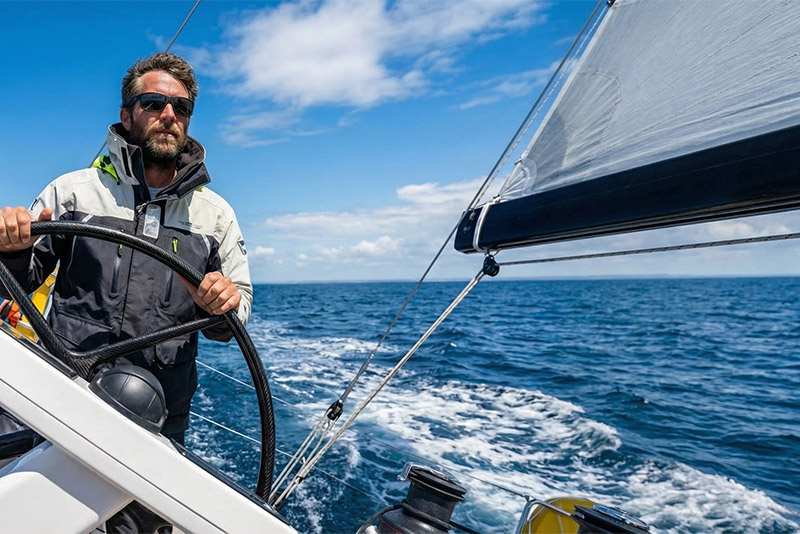
- Understand the logic of sailing upwind ("into the wind") and sailing downwind, and how changes in angle to the wind affect speed, stability and control of the vessel.
- Adopt the basics of sail trimming: what "good trim" means, how to recognize it and correct it (sheet, traveler, vang, sheets and other basic controls), with a focus on simple, repeatable rules.
- Practice basic maneuvers: tack and gybe, with proper crew coordination, clear commands and safe execution in real conditions.
- Develop practical skipper habits for short cruising: planning the daily route, estimating sailing time, selecting safe anchorages, buoy fields and marinas.
- Develop competencies for making safe decisions: assessment of weather and sea conditions, timely reefing of sails and choosing the safer option when conditions become more demanding.
ANCHORING AND BUOYS
- Practice picking up and securing to a buoy: safe approach, vessel control and clear crew roles.
- Adopt correct anchoring techniques: selection of location, sufficient chain length and checking whether the anchor is holding.
Course Program
1 DAY 1 — INTRODUCTION AND BASIC THEORY
- Ship terminology, check-in, basics of sailing.
- Safety at sea.
2 DAY 2 — BASICS OF MANEUVERING AND VESSEL CONTROL
- Exercises of precise vessel control at low speeds (forward/reverse, control of angle and inertia).
- Understanding the effect of rudder, throttle and propeller walk.
- Simulation of stern docking with proper preparation of lines and fenders.
3 DAY 3 — STERN DOCKING AND WORKING WITH SPRINGS
- Stern docking: assessment of the situation in the marina, positioning and approach with a 90-degree turn.
- Exercises of tying lines and safe departure from the berth.
- Departure and maneuvering using springs to control angle and vessel stability.
4 DAY 4 — ALONGSIDE DOCKING, BUOY AND ANCHORING
- Alongside docking and safe departure from a confined space.
- Approaching and picking up a buoy – bow and stern, with speed control and crew communication.
- Basics of anchoring: selection of position, correct paying out of chain and checking anchor holding.
5 DAY 5 — DEPARTURE FROM PUNAT, CRUISING AND MANEUVERS
- Route planning: basics of meteorology, passage plan, safety procedures.
- Practice: hoisting/lowering sails, working with lines, clutches and winches, basic trim.
- Selection of anchorage (wind, seabed, shelter, forecast) and overnight stay at anchor or buoy on one of the Kvarner islands.
6 DAY 6 — NAVIGATIONAL SAILING AND SECOND NIGHT ON THE ISLAND
- Sailing according to the planned route: tack, gybe, sailing on a set course.
- Entering a new bay using visual references (marks, depths, shelter), safe approach and staying at anchor (holding check, safety routines).
- Planning the second anchorage according to forecast and conditions; overnight stay at anchor/buoy on another island.
7 DAY 7 — RETURN TO PUNAT AND INTEGRATION OF SKILLS
- Navigational sailing back: route adjustment, reefing if necessary.
- Taking responsibility and leading the crew (communication, role distribution).
- Arrival in Punat, debrief and recommendations for further practice.
Note: The course program may change depending on weather conditions. The instructor will adapt the plan if necessary in order to ensure, in the given circumstances, the highest possible level of safety and course quality.